
Training is the highest-leverage activity a sales leader can take on, yet most skip it due to lack of content and time. Nine years into sales leadership, I still personally build and deliver training for my teams. I delegate a lot, but not this.
Nothing drives revenue and retention faster than effective team development. The problem isn’t that leaders don’t care about training—it’s that they don’t know what to train on or don’t have time to build the content from scratch.
Why Most Sales Leaders Skip Team Training (And Why That’s Costly)
The reality is simple: most sales leaders want to train their teams but get stuck on execution. They know training matters, but building comprehensive content feels overwhelming when you’re already managing deals, forecasts, and team performance.
Here’s what I see happening: leaders recognize the gap, make a mental note to “build something,” then get pulled back into the daily whirlwind of sales leadership. Months pass. The training never gets built. Performance suffers.
This isn’t a motivation problem—it’s a resource problem. Building effective training content requires deep expertise in adult learning, sales methodology, and content creation. Most sales leaders are experts at selling and leading, not curriculum development.
The Real Cost of Not Training Your Sales Team
The business impact goes far beyond just “hurting performance.” When you don’t develop your people systematically, you create a retention crisis that destroys productive capacity.
Development plus accountability equals results. Results equal high engagement. High engagement equals high retention. Few things are more painful in sales leadership than losing a ramped and productive AE. You immediately lose a significant percentage of your productive capacity, and once you factor in the time it takes to hire and ramp a new AE, you have an uphill battle to hit your number.
The math is brutal: two sellers with a quota of $500,000 means your productive capacity is $1,000,000. If your quota is $1,500,000 and you lose one ramped rep, you’re in serious trouble. Late or bad hiring combined with poor retention is a nearly guaranteed way to miss your number.
What a Complete Sales Team Training System Actually Includes
A real training system isn’t a collection of random sales tips or motivational content. It’s a connected framework that covers every stage of the deal cycle as one integrated approach.
The system I use with my teams at LaunchDarkly includes the full AE Operating System—12 modules covering territory planning through deal closure. Each module builds on the previous one, creating a comprehensive methodology rather than scattered tactics.
The leadership component is equally critical. Complete leadership frameworks covering hiring, developing, and retaining top talent. These aren’t theoretical concepts—they’re the same frameworks that have produced 100+ direct promotions from my teams.
Monthly deep-dive trainings keep the content fresh and relevant. Whatever I’m actively testing with real reps in real deals becomes part of the system. This isn’t a course I built three years ago and stopped updating—it’s the live, pressure-tested version I’m constantly refining.
The system also includes proven methodologies like early stakeholder engagement and a buyer-focused selling approach that transforms how reps think about their role in the sales process.
How to Diagnose Training Gaps Before They Cost You Deals
The most effective training systems start with accurate diagnosis. You can’t fix what you can’t measure, and most leaders assess reps at the person level rather than the skill level.
Everyone is low-skill in some areas and high-skill in others. The key is breaking down broad competencies into specific, coachable skills. I learned this lesson early when I managed an AE who seemed great at prospecting because they were always setting meetings. However, they closed no deals.
When I dug deeper, I found they were setting meetings with the wrong people in the wrong accounts. The skill “prospecting” needed to be broken down into account prioritization, understanding business models, messaging, and cadence strategy. Once we diagnosed the specific gap, the fix was simple.
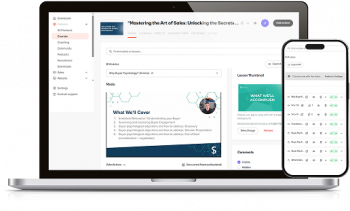
This diagnostic approach aligns with identifying the traits that make AEs successful while pinpointing exactly where development efforts should focus. The Coaching App I’ve built asks the same questions I’d ask in a 1:1 with one of my reps, then builds a training plan mapped directly to those gaps.
Why Sales Leaders Should Copy (Not Create) Training Content
My offer is simple: copy me. Everything inside Sales Introverts Insiders is the same system I’m actively delivering to my teams right now.
Bill Maloy, a sales leader, put it this way after using the system mid-flight: “Holy shit, this is amazing. I’m on my phone on a flight for an important meeting and running this prep session and building a training for the team at the same time.”
You can watch me deliver a training, download the content, make any tweaks you need, and deliver it to your team. You don’t even have to give me credit.
Adam Kling, CRO at Platform One, captured why this approach works: “This isn’t cookie-cutter content peddled by influencers with no experience. This is hard, tangible content that has already impacted my processes for the better.”
The system includes Kyle GPT, trained on my entire methodology, so you can get answers at 9 PM the night before a big call. It’s like having access to my brain without having to hire me as a consultant.
Getting Started with a Proven Sales Training Framework
Getting great at coaching your team is one of the most impactful things you can do this year. I’ve already done most of the work building the frameworks, creating the content, and testing it with real teams in real deals.
The complete system is available through Sales Introverts Insiders. You get immediate access to everything—the AE Operating System, leadership frameworks, monthly trainings, and the diagnostic coaching app that builds personalized development plans.
Ready to copy my homework? Here’s the link to get access: salesintroverts.com/join-insiders